
帝都
Chinese tourist killed, daughter injured in motorcycle cliff crash in Thailand: media report_我的网站

一 | The ouster of Sri Lankan President Gotabaya Rajapaksa has roused substantial global media attention, particularly in light of the colorful images coming out of the country of protesters storming his opulent Colombo residence and turning it into a tourist attraction, posing for selfies, and organizing pool parties and cookouts.,But the chaos in Colombo isn’t the first time in the last decade or so that a head of state has been ousted from office in a time of crisis and forced to flee, with the last dozen years witnessing at least five comparable cases.,Ashraf Ghani’s Bags of Money,Last August, a ten-day blitzkrieg offensive by the Taliban* to capture cities in the midst of the NATO withdrawal culminated in the fall of Kabul and the collapse of the Afghan government. President Ashraf Ghani, the US-educated academic-turned president, fled the country he ruled at the West’s behest for seven years.,Ghani evacuated Kabul on August 15, the same day that Taliban fighters entered the city, and eventually ended up in the United Arab Emirates, where he took refuge. Ghani apologized to his countrymen and women for bolting, saying that leaving the capital “was the most difficult decision” of his life and that he took it to avoid a repeat of the bloody street fighting witnessed in the city between government and Taliban forces in the 1990s. In addition, he said, his security team had advised him not to stay due to the risk of assassination or capture.,The Russian Embassy in Kabul painted a different story, alleging that Ghani fled the city in a convoy of vehicles stuffed with so much cash that it could not fit in a helicopter which took him out of the country. UK media later alleged that Ghani may have sought to smuggle as much as $169 million in cash out of Kabul, with a former bodyguard later confirming that the ex-president’s entourage was carrying “many big bags” containing “hundreds of millions, perhaps billions of dollars.”,Ghani has categorically rejected the allegations against him, and has said that he would welcome an international investigation to clear his good name.,AfghanistanEx-Afghan President Ghani Says He Was Made 'Scapegoat' for Fleeing, Blames Trump - Report 31 December 2021, 03:27 GMT,Evo Morales’ Happy Ending,On November 10, 2019, Bolivia’s long-serving democratic socialist president Evo Morales was forced to step down after weeks of protests sparked by an election whose results were disputed by the country’s US-backed opposition. Characterizing the crisis as a “coup” and fearing he would be killed by assassins hired out by his enemies, Morales fled to Mexico, where he was granted asylum by President Andres Manuel Lopez Obrador.,The Trump administration hailed Morales’ ouster, with the US president tweeting that the unrest sent “a strong signal to the illegitimate regimes in Venezuela and Nicaragua that democracy and the will of the people will always prevail.”,But the anti-Morales’ plot’s victory was short-lived. Immediately after touching down in Mexico, Morales vowed that he’d remain in politics, and that his “fight” against “discrimination and humiliation” would continue.,In late 2019, after the election victory of leftist forces in Argentina, Morales traveled to that country, where he was granted asylum. In November 2020, after new elections in his home country saw the victory of Luis Arce, his former finance minister, Morales triumphantly returned to Bolivia. Today, although he is not president, Morales remains a major force in Bolivian politics, consistently attacking “Yankee imperialism” and recently calling on Bolivia and Argentina to join forces to become a global lithium-producing superpower.,The fate of his adversaries has not been so bright, with Jeanine Anez, the right wing politician who took over after Morales’ ouster, recently sentenced to ten years in prison for her role in the 2019 coup.,© Photo : Twitter / @evoespuebloFormer Bolivian President Evo Morales during his triumphant return to his home country in November 2020.Former Bolivian President Evo Morales during his triumphant return to his home country in November 2020.© Photo : Twitter / @evoespueblo,Yemen’s Hadi,In 2012, Yemeni politician Abdrabbuh Mansur Hadi seemed to have the world at his feet. Succeeding President Ali Abdullah Saleh, whom he faithfully served as vice president starting in 1994, Hadi won the February 2012 presidential elections with an impressive 100 percent of the vote, running as the sole candidate. He proceeded to initiate a US- and Saudi-supported reform program aimed at transforming Yemen into a federal model of government under which six regions would enjoy large-scale political autonomy. Hadi also supported ramping up cooperation with Washington to fight piracy in the Gulf of Aden, and al-Qaeda** cells attempting to set up shop in Yemen’s sparsely populated northeastern territories.,Hadi’s reforms, allegations of corruption, and the ill-fated decision to end fuel subsidies in 2014 proved fatal, and between late 2014 and early 2015, much of the country was overrun by the Houthis, an Islamist, social justice-oriented political and militant movement dominant in the country’s populous western provinces. In January 2015, Hadi left his presidential palace in Sana’a for the last time, and, without resigning, flew to Saudi Arabia.,© AP Photo / Hani MohammedShiite Houthi tribesmen hold their weapons as they chant slogans during a tribal gathering showing support for the Houthi movement, in Sanaa, Yemen, Saturday Sept. 21, 2019Shiite Houthi tribesmen hold their weapons as they chant slogans during a tribal gathering showing support for the Houthi movement, in Sanaa, Yemen, Saturday Sept. 21, 2019© AP Photo / Hani Mohammed,Two months later, in March 2015, a Saudi-led military coalition began a military operation in Yemen aimed at restoring Hadi to power. Seven years on, the coalition has made little progress, and the impoverished southern Arabian nation remains mired in a deep political, military, economic and humanitarian crisis. Meanwhile, the Houthis have counterattacked by launching drone and missile strikes targeting Saudi infrastructure, military bases, airports, oil facilities, missile defense systems and cities, with no amount of sophisticated US-made air defense hardware seeming sufficient to stop the attacks.,As for Hadi, the exiled president resigned from the post in April, transferring power to an eight-member ‘presidential leadership council’ tasked with negotiating a permanent ceasefire with the Houthis.,Saudi Arabia ‘Pushed’ Yemen’s Hadi to Resign, Placed Him on House Arrest - WSJ17 April, 22:22 GMT,Ukraine’s Yanukovych,Of all the ejections from office featured in this list so far, perhaps none have been more consequential to the geopolitical instability being experienced by the world today than that of Ukrainian President Viktor Yanukovych.,Yanukovych handcrafted the crisis which would culminate in his ouster in the winter of 2013 by pulling a major political U-turn and rejecting an association agreement with the European Union in favor of closer ties with the Russian-led Eurasian Economic Union. The decision prompted pro-EU protesters to flood the center of Kiev, with demonstrators establishing tent encampments and occupying the heart of the city – the Maidan Nezalezhnosti (lit. ‘Independence Square’).,Protests continued for weeks, with Yanukovych making concessions under EU pressure, accepting the resignation of the government of Prime Minister Nikolai Azarov in late January, and negotiating with an increasingly emboldened opposition to try to resolve the crisis.,On February 20, protests turned bloody, with 49 demonstrators and four police officers killed by mysterious snipers in a single day. On February 22, just a day after reaching an EU-backed agreement on the settling the crisis through early elections, Yanukovych fled Kiev in fear for his life, traveling east and slipping across the border into Russia, where he was offered refuge. Pro-European forces in Ukraine’s parliament drafted a resolution to strip Yanukovych of power, claiming he had “withdrawn from his duties in an unconstitutional manner.” From Russia, Yanukovych blasted the new authorities, and characterized his ouster as a coup d’état.,Kiev, Washington Responsible for Failure of Minsk Peace Agreements, Ukraine's Former President Says14 March, 15:17 GMT,Tunisia’s Ben Ali,On January 14, 2011, President Zine El Abidine Ben Ali’s 24-year reign as Tunisian leader came to an end, with the president and his family fleeing the country to Saudi Arabia after weeks of protests which would hail the start of the so-called ‘Arab Spring’. The ‘Tunisian Revolution’ was driven by long-standing grievances among Tunisians about corruption, high unemployment, inflation, and general poor living conditions, as well as limitations on freedom of speech. The protests were sparked by 26-year-old street vendor Mohamed Bouazizi, who set himself on fire in the street after police confiscated his wares when he failed to pay a bribe, and after his plea for help from the local governor was left unanswered. The young man's act, which would cause over 100 copycat immolation attempts, would spark a month of protests which culminated in Ben Ali’s ouster.,After his ejection, the Tunisian president would live to a ripe old age of 83, passing away in Jeddah, Saudi Arabia in September 2019. But the unrest which his removal sparked would end up transforming much of the Middle East and engulfing some of its countries in crisis which continue to reverberate to this day. In 2011, major protests rocked Algeria and Yemen, and led to the overthrow of the government of Hosni Mubarak in Egypt. In Libya, NATO lent a ‘helping hand’ to anti-government rebels by launching a campaign of airstrikes against forces loyal to Muammar Gaddafi, culminating in his ouster and televised murder, and turning Libya into a failed state. The contagion of the Arab Spring also spread to Syria, which was turned into a breeding ground for jihadist militants who flocked to the country from the region and across the globe to take part in the unsuccessful US, Turkish, Saudi and Qatari-backed campaign to try to oust the government of Bashar Assad.,Ousted Tunisian President Ben Ali Buried in Saudi Arabia - Reports21 September 2019, 17:53 GMT,* An organization subject to United Nations sanctions for terrorist activities.,** A terrorist group outlawed in Russia and many other countries.。

二 |
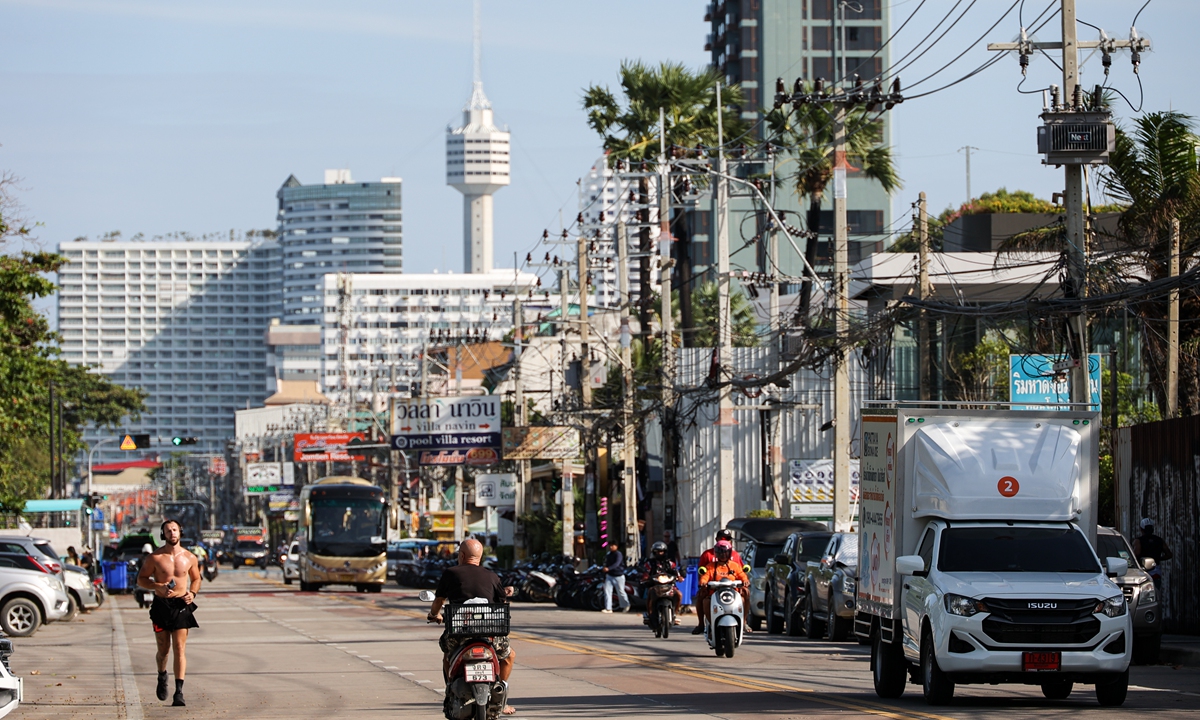
The Chinese man died at the scene, while his daughter was injured and taken to a hospital for treatment. Local police were investigating the cause of the accident, CCTV News reported.
Global Times
。

三 |
Current article:http://oxuxtaj.shuazhepenxingshuaisenqienai.buzz/dmi/20260826/88377.html
Published on:21:08:06


1
वैष्णो देवी में हुए लैंडस्लाइड में अमृतसर के एक ही परिवार के 3 सदस्यों की मौत, पूरे गांव में पसरा मातम2
PriceSeek提醒:2026年1-7月西双版纳天然橡胶加工量同比增长3
《天堂》开发商二次元新作!《阿索拉:星之祈愿》开启测试玩家招募4
Sri Lanka Allows Firms From Oil-Producing Nations to Sell Fuel in Retail Markets5
贝尔戈米:莱奥目前的状况让我感到很遗憾,他需要得到关爱6
三人篮球奥运季军成员王丽丽:巴黎奥运 想把铜牌换金牌7
市场监管总局部署实施2026年度燃气燃烧器具相关产品CCC认证有效性抽查8
【IT之家开箱】喜马拉雅小雅纳米智能音箱图形赏析:小体、大内容9
罗宾·威廉姆斯子女重启其 Instagram 账号,发声抵制 AI 滥用10
广州海关:查获4吨烟花爆竹11
WNBA-韩旭贡献6分1板1助1帽1断 助自由人20分逆转12
B站2233卡无流量应用程序新:猫耳FM(M站),二次元件声音13
便民购彩新场景!7-11便利店焕新升级14
FDE惨遭“污名化”:不就是驻场外包吗?15
建设“橙汁之都” 重庆忠县力争到2030年柑橘全产业链综合产值突破200亿元,建设“橙汁之都” 重庆忠县力争到2030年柑橘全产业链综合产值突破200亿元
- 随机推荐
1
车厘子便宜了!广西车厘子大量上市,部分卖到15元一斤2
华为Mate XT 2新一代三折叠官宣:9月7日见!首发HarmonyOS 73
11 sent to hospital after ammonia leak at Southern California building4
专访台湾编剧何昕明:创作很孤独,所以要打团体战5
造谣的都被抓了!小米:依法打击使用AI技术等方式造谣抹黑公司行为 维护企业商誉6
银河期货:LPG需求走弱7
一场“议论纷纷”的党课,为何广受好评?8
大洛领衔内线!Fischer:快船没有在寻求中锋位置上的升级9
双色球一等奖3注1000万元,奖池5.45亿元10
Home-made C919 completes first international commercial flight, lands in Ulaanbaatar11
多地景区实施门票“免减优”政策 多元化经营模式开辟营收“新赛道”12
杰伦威:身体状态完美 新赛季目标只有总冠军13
巴基斯坦陆军参谋长将访问伊朗14
广汽传祺6月最新购车权益上线 涉及多款车型,权益各不相同15
Russia's new strikes on Ukraine power plants